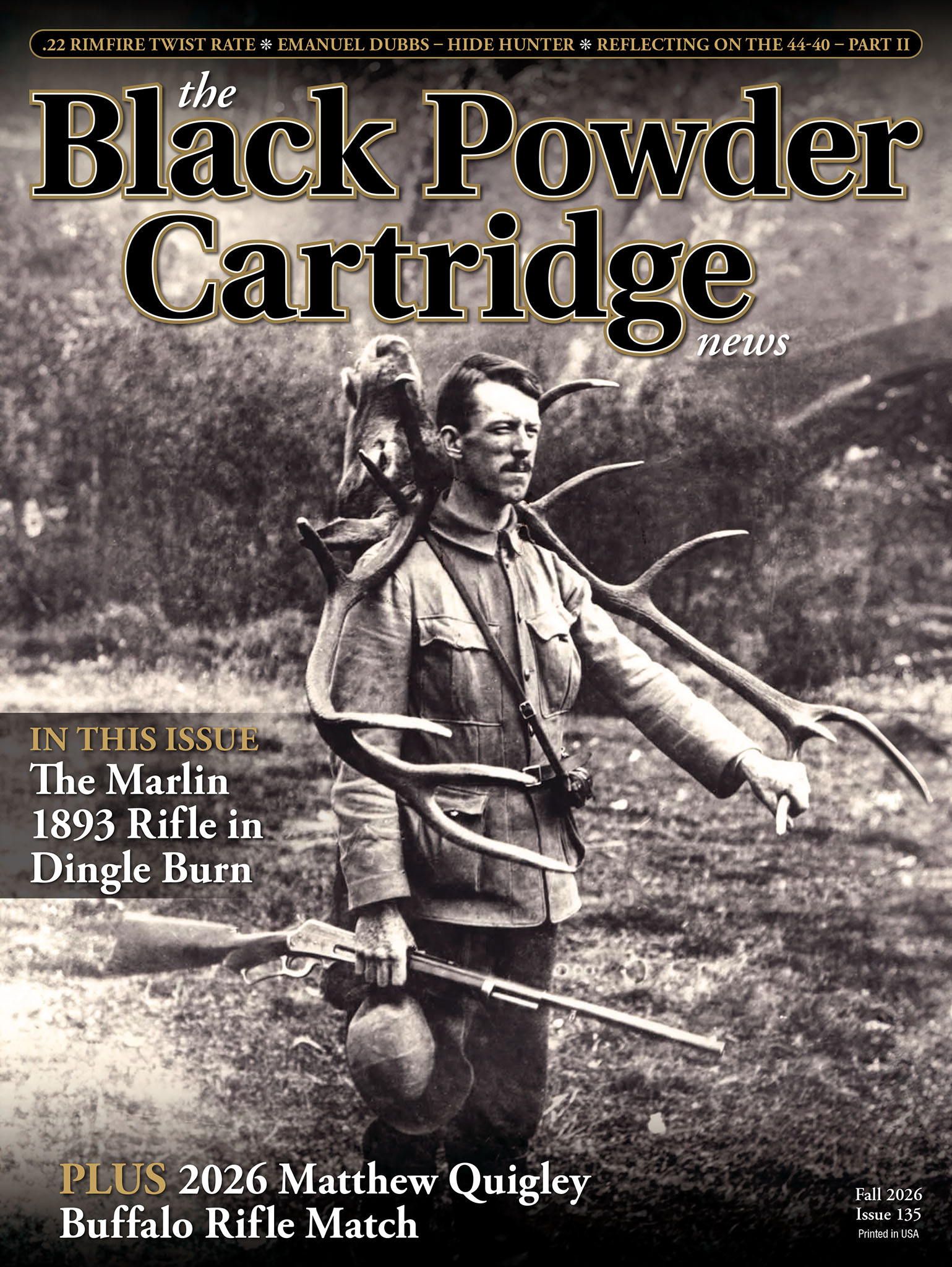
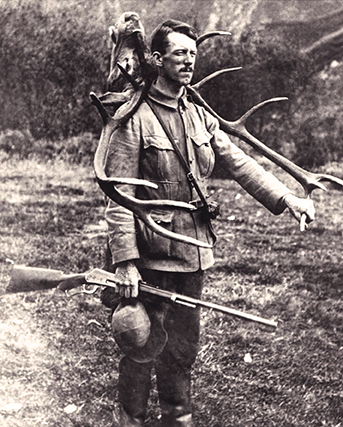
On our cover this issue is an old photo picturing New Zealand deerstalker, Conrad Hodgkinson and in his hand a fine Marlin Model 1893 rifle. Whereas the Winchester 1894 in its many variations is easily recognizable by many people, the Marlin has always been a bit different. When I was a boy and listening with the attentiveness of an aspiring young hunter, I often heard my relatives talk of one neighbor who was a bit “different”. While the majority of my hunter-relatives carried Winchester rifles, this close friend of my grandfather packed an 1893 Marlin rifle (not carbine) chambered in 32 Special with a half-magazine and half octagon barrel. This was quite a departure from what was considered standard; most hunters in the group carried Winchesters in various configurations. Marlin firearms were definitely “that other rifle.”
The Marlin 1893 was arguably one of the best rifles of the period, and from this rifleman’s standpoint, a much better patent than the 1894 Winchester. One single fact really stands out; the Marlin can easily be cleaned from the breech after dropping out the breech block. This can be effortlessly accomplished by pulling the lever pin and sliding out the lever and breechblock. The ’94 Winchester is prohibitively complicated to remove the breechblock and so is most often cleaned from the muzzle, something that is not conducive to maintaining an undamaged crown.
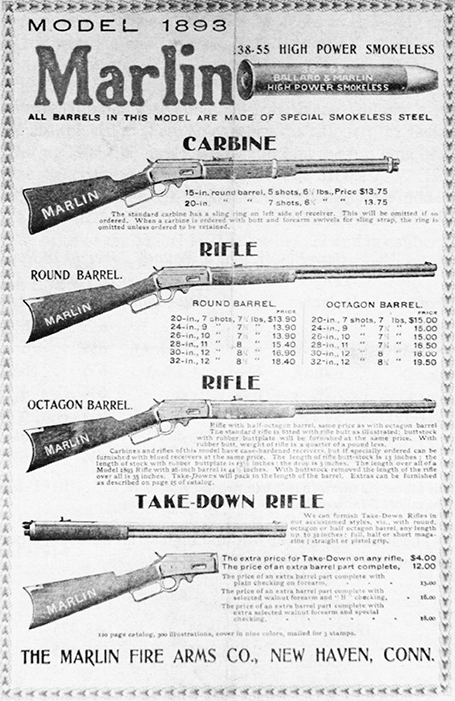
The Marlin 1893 Model was a completely re-designed action from Marlin’s earlier 1888 and 1889 models. The biggest and arguably the best change was the side ejection. Now a scope could be mounted without ejected brass hitting it and the rifle could be singly loaded much more easily. The solid top
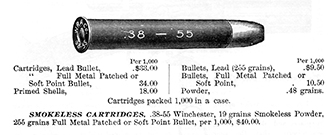
was reportedly a stiffer, more inherently accurate action but this claim is somewhat disputable. The 1893 Model was originally offered in the usual configurations of the day including a carbine, rifle and musket. The rifle could be had with full octagon, half-octagon and full round barrels with half and full length magazines. A prospective customer could special order any combination of features, barrel lengths, straight or pistol grip stocks that he was willing to pay for. Standard calibers upon introduction were 32-40 and 38-55, both Marlin/Ballard cartridges. Soon after the new lever action was offered in 30-30, 32 Special and a lesser known, but very interesting cartridge, the 25-36.
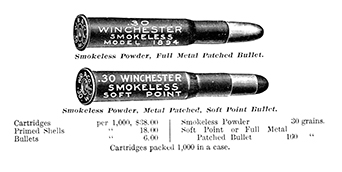
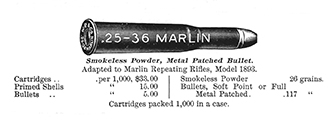
The 25-36 Marlin was a slightly longer cartridge than the more familiar 25-35 WCF. It was, however, a second-place finisher in velocity to the 25-35 throwing the 117-grain bullet at 1855 fps in the factory loading compared to the 25-35’s factory load of a 117-grain bullet at 2200 fps. This probably accounts for its relative obscurity. Both would make an adequate deer rifle with correct shot placement and close stalking, but one would definitely be on the margins. The extra bit of velocity made the 25-35 much preferable in many hunter’s minds.
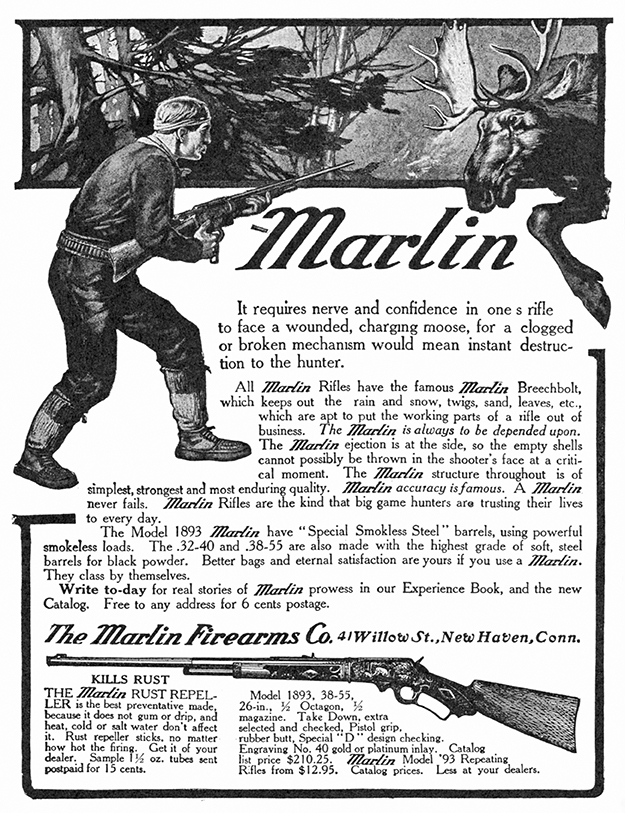
The new Marlin repeater found immediate favor with the hunters and sportsmen of the era. Our New Zealand deerstalker obviously enjoyed fine rifles, as his Marlin is a deluxe model with fancy wood, checkered buttstock and half-round barrel; this was not a cheap rifle back in its day. Whatever caliber it was, is lost to history, but doing some informed speculation, I would have to say that it would most likely be in 38-55 caliber, something that would be very appropriate for anchoring a red deer stag of the size that he is pictured with. The old 38-55 High Velocity loading was no “shrinking violet” with its 255-grain bullet at a reported 1,593 feet per second. Even by today’s standards, it would be a good choice for stags in the New Zealand bush by the traditionally minded hunter. The 32-40 and 32 Special were also efficient game getters with the 32-40’s High Velocity loading of a 165-grain bullet at 1,700 fps and the Special’s loading of the same bullet at 2,100 fps.
However, a reasonable second guess on our part would be that Mr. Hodgkinson chose to embrace the then-new 30-30 WCF cartridge with its original loading of a 160-grain bullet at 1,970 fps. The 30-30 was quite a departure for the old black powder rounds of the era and its early popularity ensured that many sporting goods stores would carry the ammunition, even in far-flung New Zealand. There’s no doubt these ballistics are not impressing our present-day Magnum shooters, but I can assure them that these cartridges in the hands of a hunter who actually stalks his game and gets close are more than adequate for job at hand. There have been many elk killed here in Montana by both the 30-30 and the 38-55, most rifles being used with iron sights as well. I personally have used the 38-55 on both deer and elk; it did the job efficiently and without blood-shooting the meat. Please remember that I typically stalk to within 100 yards of the vast majority of big game animals that I shoot.
The 32 Special would have also been a good choice from the ballistics standpoint, but I tend to think that source of supply in New Zealand would have been a bit iffy. The “Special” was a bit of an odd-ball, even in the States, whereas the 30-30, and ammunition for it, was available nearly everywhere cartridges were sold. There’s no way I could know where Conrad bought his Marlin, but if it was from a gun shop in New Zealand, I bet the store owner was sure to stock a rifle (along with it’s ammunition) that was readily available.
Another thing that stands out about this old photo is the fact that Mr. Hodgkinson is carrying what would termed in New Zealand as a “flash” rifle. Most old photos one sees of deerstalkers or “cullers” show the hunter carrying a beat-up, cut-down 450 Martini or 303 British military rifle that looks like it could have been used to drive tent stakes with. The fact that Conrad has a Marlin rifle like this says that he was appreciative of a good rifle and wasn’t afraid to spend money on one.
For those interested in such things, the red stag head that Conrad is carrying on his back was reportedly shot in the headwaters of the Dingle Burn in 1902. Length was 46 inches; the spread was at 42 inches and circumference of the beam was 5¾ inches. I count six points on each side, so in Kiwi parlance the stag would be a “12-pointer.”
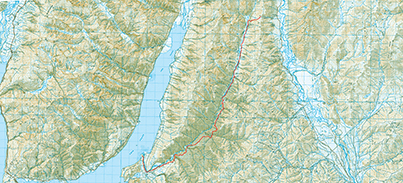
For those unfamiliar with New Zealand topography, the Dingle Burn region is in the Hawea Conservation Park and the “Tussock Country” of the South Island. Within the Park is the famous track (trail) and it was renowned back in earlier days for its red deer hunting, and still is to a lesser extent. The Dingle Burn area has some of the most beautiful scenery in the South Island and definitely worth a look if chance should put you close by. The area is very remote so one should prepare accordingly.
Thanks to the New Zealand Deerstalkers Association for the information and photo of Conrad Hodgkinson and to our good friend, Mike Gibson, for making us aware of this great photo. The Deerstalkers are a major force in promoting the responsible management of New Zealand wildlife, firearms safety and ethical hunting practices. Even if you will never journey to far away New Zealand, the Deerstalkers are an organization worthy of your support. They are constantly engaged in the fight to keep hunting alive and well. When it comes to combating those who would ban all forms of hunting, we are in the same boat, worldwide.