

Reflecting on the 44-40
Part II
feature By: Mike Nesbitt | October, 26
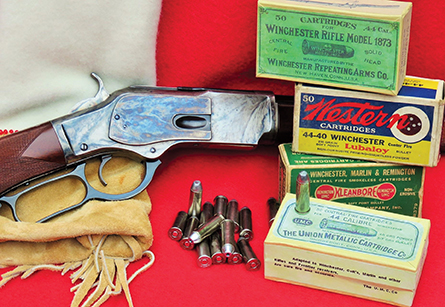
My reflections on the 44-40 continue. In Part I, the history, popularity and variety of the guns and loads for the 44-40 were discussed, including the smokeless powder cartridges which expanded the variety of ammunition for this old black powder cartridge. Now, here in Part II of this tale, I want to talk more about the new firearms made for the 44-40, as well as shooting them with black powder loads.
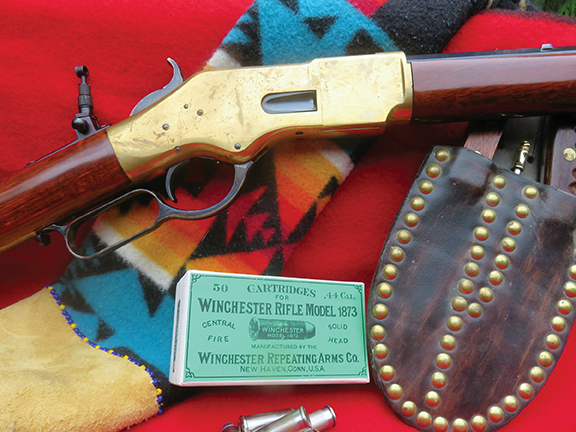
If we follow the path of history, then the first
The very same thing can be said about the replicas of the 1866 Winchester rifles, the first Winchesters. The originals of those had the same action length as the Henry rifles. This makes sense because they fired the same Henry rimfire cartridge. In fact, the first of the 1866 rifles and the last of the Henrys were made side by side, at the same time. How much overlap there was isn’t actually known but the overlap did exist. As with the replicas of the Henry rifles, we couldn’t very well expect the new 1866 rifles to be produced in 44 Henry Rimfire if we wanted to shoot them.

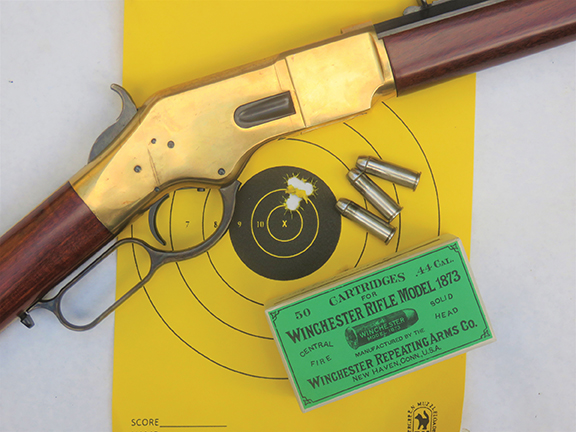
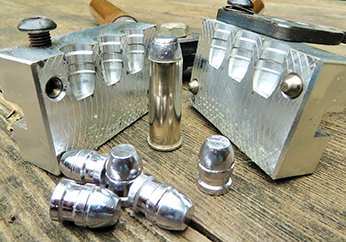
Those 205-grain bullets get loaded over 35 grains of Swiss 3Fg powder, which is a rather full load in the modern (Starline) solid head cases. With this amount of powder, the powder is compressed as the bullets are seated but the bullets are not deformed. Performance with the load is excellent and it’s the load that was featured (Spring 2025, Issue 129) in my testing with the 44-40s with various barrel lengths, from 16 to 30 inches. My 20-inch barreled replica of the 1866 was one of the rifles used for that testing and in that rifle the loads just mentioned developed a velocity of 1,295 feet per second. This is just five feet per second shy of the advertised velocity of the original factory loading.
With rifle barrel lengths of 24 inches or longer, the 35-grain loading of Swiss powder under the 205-grain bullets exceeded the 44-40’s old advertised velocity of 1300 fps.
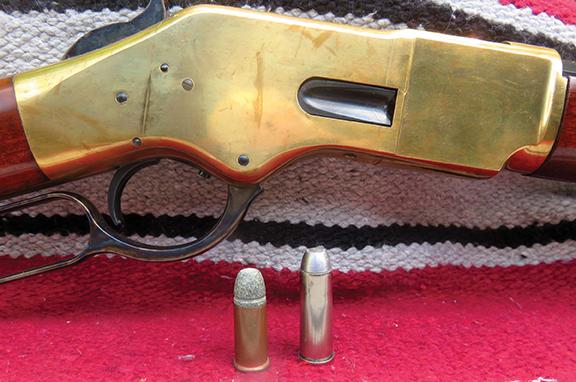
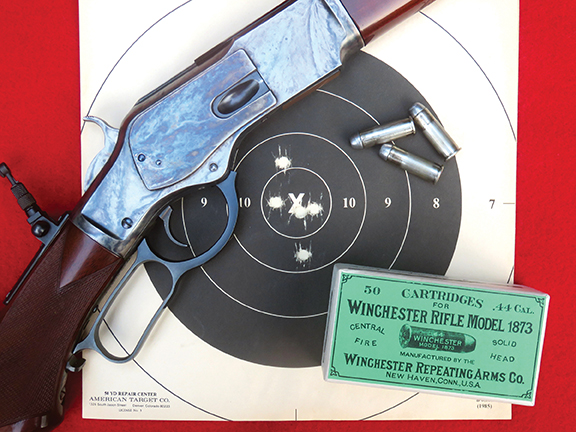
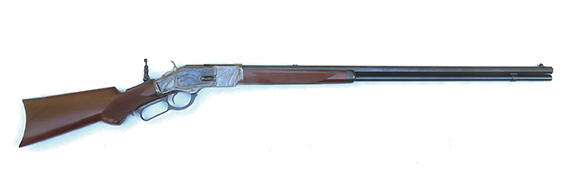
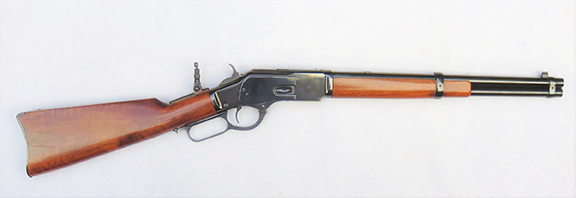
The real classic 44-40 rifle, of course, is the Model 1873, the rifle that introduced the 44 WCF cartridge. Whether you agree that it was the Winchester Model 1873 that won the West or not is up to you. All I can say about that is how the lever-action Model 1873 has won my heart. I like this rifle far too much to have only one of them. My real favorite is the Uberti replica brought in by Cimarron Firearms with the 30-inch barrel. I consider that as my “go-to gun” and I find myself taking it out of the gun rack more than most other rifles, certainly more than any other 44-40.
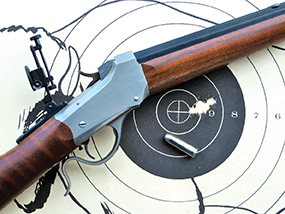
Today, just as in the old days, the 44-40 is not restricted to lever-action repeaters. What might be considered the very best of the 44-40 rifles in my personal array is the single-shot 1885 Low Wall Classic that was made by C. Sharps Arms. This fine rifle has a 28-inch No. 3 weight barrel and it certainly does shoot with the best of them. In this gun the most commonly used load is the very same as for the lever-action rifles but the Low Wall has fired groups that the lever-actions have not been able to duplicate.
If a single-shot 44-40 interests you, look on the C. Sharps Arms website. They will make an 1885 Low Wall or High Wall and currently they show the 44-40 as having a 1 in 24-inch rate of twist in the barrel. This would be good for shooting with bullets heavier than the standard 44-40 loads with the 205 or 215-grain bullets. Therefore, if you’d like a Sharps rifle, such as the 1874 Hartford, C. Sharps Arms will make one of those for you in 44-40 caliber. While the old Sharps factory didn’t do that, as far as I know, some of the frontier gunsmiths certainly could have. It’s just my guess that a Sharps ’74 Hunters Carbine with the barrel length of your choice in 44-40 would be a gun worthy of putting some meat on the table. For models, prices, and all options, take a look on the C. Sharps Arms website at csharpsarms.com.
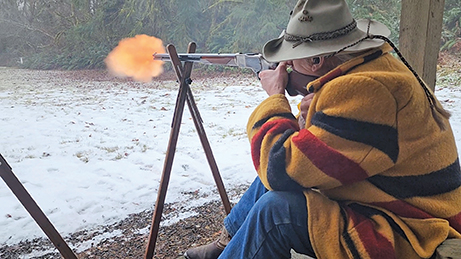
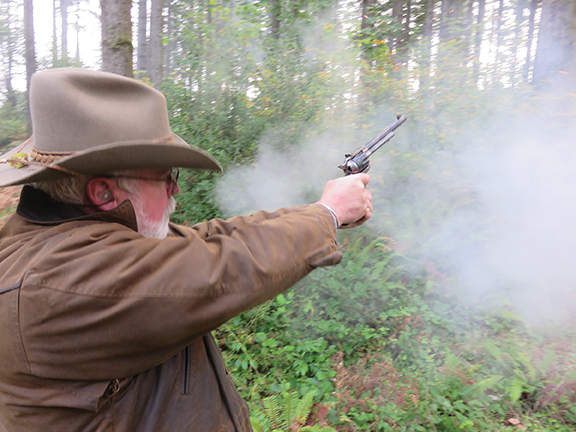
With all of this talk about currently available rifles in 44-40 caliber, you might be thinking that I’m ignoring revolvers; not at all. Very few black powder revolvers go “off with a bang” anything like a fully-loaded 44-40. To say that a full black powder load in a 44-40 revolver is a real handful is putting it mildly. That’s a real performer and is the type of six-gun where if you like it, you’ll love it, but if you don’t like it, you’ll want to avoid it.
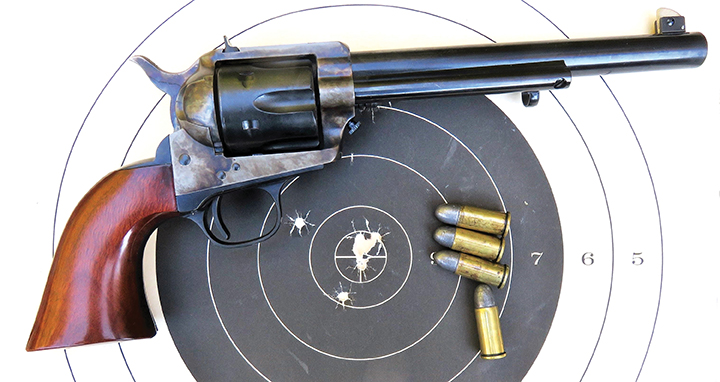
In my opinion, a 44-40 revolver that is intended to be used with full black powder loads should have the 7½-inch barrel, just to use that powder charge effectively. Again, in my opinion, one of the best revolvers made for the 44-40 is (or was) the Uberti Cattleman Flat-Top, which was imported by Dixie Gun Works. That gun has the sights that really make the difference. I say “or was” because Dixie is currently out of stock for this model and I’ve asked if they will be bringing in another run of them but have received no answer. With the 35 grains of Swiss 3Fg powder, the 205-grain bullets left the 7½-inch barrel at the average speed of 1,020 feet per second…that’s “moving-on” for a black powder revolver. Shorter barrel lengths were not tried.
Loads with reduced powder charges could be used and that would simply mean keeping the rifle and revolver loads separated. However, I enjoy the performance of the 44-40 rifles with the full loads and I do feel that the 44-40 is more of a rifle cartridge than a revolver cartridge.
So, I’m hoping Dixie will bring the Cattleman Flat-top back and I’d personally love to see it with the option of 44 Special chambering.
Of course, there is a very wide array of revolvers made today for the 44-40, from the many copies of the “Colt Frontier Six Shooter” to the top-break Smith & Wesson Schofield Model (which was not originally made in 44-40). In addition to those, the third generation of the Colt Single Action Army has been available chambered for the 44-40 since about 1980. I’ve had a couple of those newer Colts and dearly loved them.
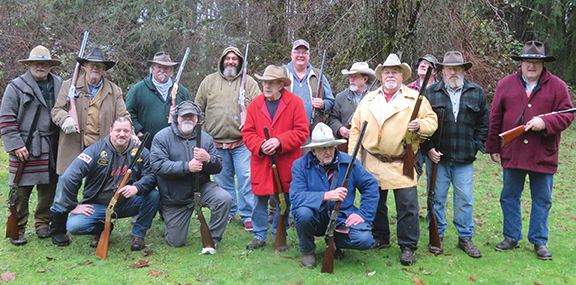
There’s a lot of shooting done these days where the grand old 44-40 will fit right in. After all, we’re not always trying to hit targets at long range. As examples, our club, the Black River Buffalo Runners, holds Lever-Gun matches almost every month where we have competition to hit targets at 100 yards and closer. In addition to those, our annual Buffalo Camp has an event called “The Meat Hunt” where participates use their camp guns to “make meat” for their dinners. The camp guns are quite often lever-action rifles chambered for the 44-40. Other clubs have similar events and even more clubs should have them simply because such shooting is so much fun. Also, I haven’t even mentioned Cowboy Action competition. To say the least, there’s a whole lot of shooting left for the old 44-40.