


Tin Oxide Scale on Cast Bullets
feature By: Lon Morris | April, 26
Now that we have that over with, this article will deal with “Tin Oxide Scale” on cast bullets. Actually, in order to discuss tin oxide scale on cast bullets, the above paragraph is necessary to give a layman a rudimentary working knowledge of oxidation. Tin oxide scale during bullet casting is primarily caused by oxidation, whereby an electron moving out of the alloy toward the cooler metal of the mould at high temperatures. This results in the formation of brittle, flaky oxide layers on the surface of the bullet (tin oxide scale), which can affect the quality and performance of the bullet.
A month ago, the only thing I knew about oxidation was that rust formed on steel through something called oxidation.
So, this is how it all began!
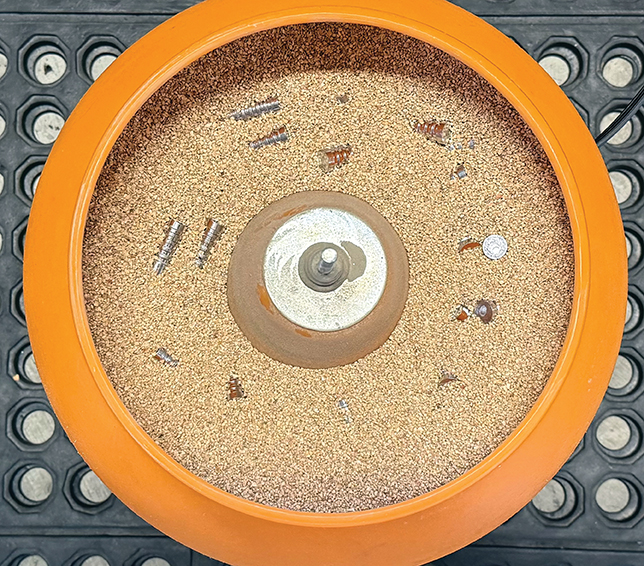
A while back, I had cast a bunch of bullets cast with a 30:1 alloy, at temperature of 825 degrees Fahrenheit. They were beautiful. I let my bullets sit overnight, as I have found the weight of the bullet changes overnight. I had not given the weight change in bullets much thought, however, while researching oxidation, I stumbled across some information that stated bullets do in fact gain or lose weight due to the hardening process that can last up to several days after casting. I weighed and sorted the bullets and wound up with a handful of cull bullets. I had used an old Lyman vibratory tumbler to clean up a nasty looking blow tube, and there the vibratory tumbler sat. I thought, “I wonder what would happen if I dumped these bullets into that corn cob media and let them polish for a while?” I dropped them in and turned the tumbler on. Three hours later, I remembered the bullets in the vibratory tumbler and dug them out of the media. I was totally and completely shocked! I had in my hand the most perfect cast bullets I had ever seen. They were dark, really smooth, grey, all of the seam lines from the mould were gone, the edges were perfectly smooth, and the bullet was perfectly defined according to mould.
During this process, I had no idea what happened or how this could have changed the structure of the bullet. I called my old friend, Steve Brooks of Brooks Tru-Bore Moulds, and explained what I had done and Steve explained it was a form of oxidation. I asked if it changed the alloy content of the bullet and he said no. Furthermore, I asked him if he thought these were okay to shoot and the answer was classic “Steve Brooks”: “Yes, and I don’t know why I didn’t think to do this!”
So, now armed with just enough knowledge to be dangerous I called Steve Garbe, editor of the Black Powder Cartridge News, and explained what I had accomplished, as well as, what Steve Brooks had told me. Steve caught on quickly, asking me a couple of questions and then said, “You don’t suppose that tin oxide scale is what we have been calling “leading” for all these years?” Steve mentioned he had two rifles and for whatever reason had lead or tin oxide scale fouled, and he was going to give them a thorough test to see, if by chance, the tin oxide scaling was the problem.
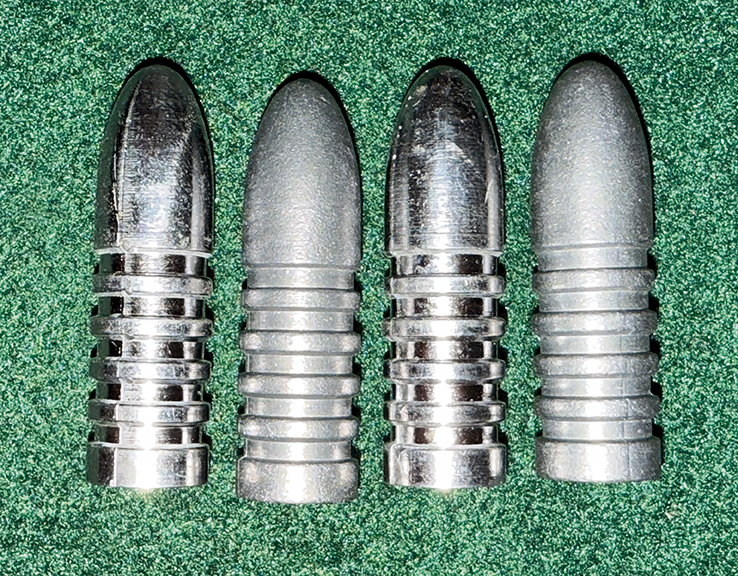
My next visit was with my old friend, Bob Nickoloff, who is a retired pipe fitter and welder, as well as, an accomplished BPCR shooter. I had hardly got my tale out of my mouth, and Bob was already in full analysis mode. He said there was no question it is oxidation, and no question the silver flakes and sometime ribbons on our cleaning patches was the tin oxide scale. He said that during the process of firing the bullet down the barrel, the tin oxide scale was more heated than the bullet alloy, if for no other reason than friction and it was possible for oxidation to again transfer the tin oxide scale from the bullet to the bore of the rifle! Bob said he was headed to the shop to vibrate some bullets and would get back to me later. The next day he called back and said he was truly shocked with the results from vibrating the bullets. He further stated he had tested tin oxide scale bullets, side by side, with vibrated bullets with no tin oxide scale and there was no difference in weight or alloy composition using a lead tester, and he said he lost about half thousandth in diameter. He was excited and couldn’t wait to shoot the bullets. He further stated that this made perfect sense, as swaged bullets do not have tin oxide scaling as swaging is a cold process.
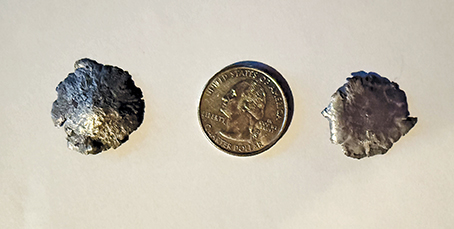
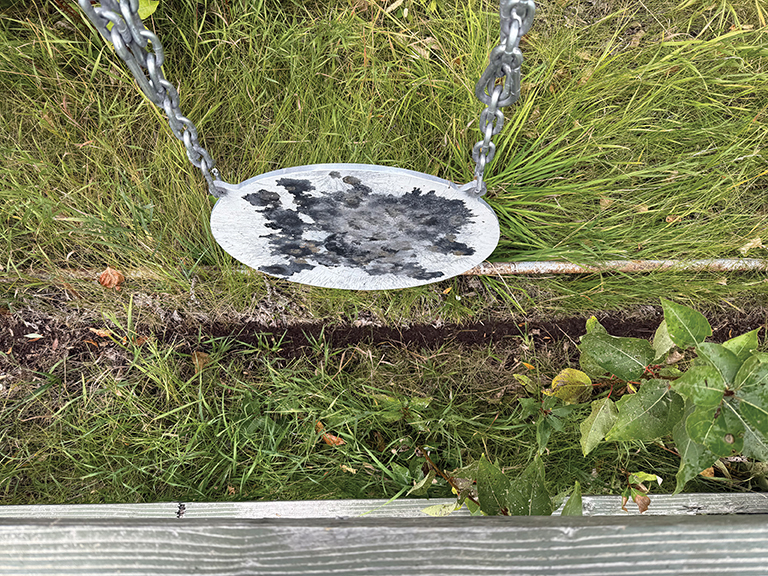
I knew the major portion of the bullet was uniformly fragmented upon impact, because of the perfectly cut trough at the base of my 100-yard gong. However, I did not understand why the very residual portion of the bullet base “saucer” remained intact, while the rest of the bullet fragmented? I was visiting with my friend Earl Hines about all of the above, and he mentioned I should go to YouTube and watch bullets impact steel via ultra-slow-motion cameras. Fascinating! The saucer is residual on most bullets, even jacketed bullets. Also, cast bullets disintegrate upon impact, but the disintegration is uniform from the nose of the bullet to the base, while the saucer remains intact. Obviously, there is serious heat generated from the bullet disintegrating! However, I still don’t know why the saucer remains intact.
My own experience has been to shoot over a 100-rounds at the recent Shiloh “Big Whisky” match, which spans over two hot, windy days. If a rifle is going to lead or tin oxide scale, it will lead under those conditions. I shoot fast and use a blow tube. Just a week later, I shot a 70-round gong match at the Yellowstone Rifle Club in Billings, Montana, and in both cases, I did not have a speck of tin oxide scale on my cleaning patches. I use a blow tube on the line between shots and use one Hoppes No.7 patch and a dry patch between relays. This is my shooting protocol at BPCR Silhouette matches as well.
I have not done a side-by-side accuracy test but I have not noticed any loss in accuracy at the matches I have shot. However, here are some questions I have in regard to tin oxide scale?
Is the tin oxide scale that is deposited in the bore of a rifle barrel caused by friction, oxidation, or both, cumulative? More importantly, why is it located in a certain area or areas of the bore?
We, as cast bullet shooters, have been fighting tin oxide scale for more than 135 years. Is the simple answer to eliminate the source? Certainly, removing the tin oxide scale is not an expensive process, as vibratory cleaners are available from any number of reloading/casting supply sources such as Lyman and Hornady.
Please, use clean corn cob media, as a friend turned his bullets “green” by using a media with polishing compound, which I am not sure I want running down the barrel under heat and pressure. Looking at removing the tin oxide scale from the bullet from an analytical standpoint, asks the question, what is the upside potential compared to the downside risk? I cannot think of any downside risk. Again, I am not a metallurgist and I found this out by accident. Therefore, I encourage you to try this and let me know your results. I would recommend though that one use a “vibratory” tumbler, as I would think that a “tumbling” tumbler could damage the bullets when they contact each other.