


The Wyoming Schuetzen Union’s “Center Shot”
Belding and Mull’s Famous .30 Caliber Bullets
column By: Jim Foral | April, 26

The stateside effects of WWI wore on the whole of American citizenry. If that era’s handloaders imagined that they would escape being affected, they were mistaken. United States arms manufacturers, ammunition plants, and industrial shops curtailed normal domestic production to pursue necessary war contracts. Thus, the American gun crank was – at a minimum – inconvenienced by the arms and ammunition shortages the fracas created.
John Barlow, founder of the Ideal Manufacturing Company, had sold out to his New Haven neighbor in 1910. Marlin continued to produce the Ideal line until 1916, when the press of war work relegated its loading tool and bullet mould business to “back-burner” status. Ideal tools were taken out of production and their essential tong tools became virtually unobtainable. Thus, Ideal was essentially out of the market it had been instrumental in creating. With Ideal impotent, the dearth of reloading tools was more than a mild bother; to civilian and military marksmen alike, it was a disabling handicap.
The Bond Machine Company of Wilmington, Delaware, had been fabricating heavy bench mounted presses for National Guard Armories and was approached by the NRA and the National Board for the Promotion of Rifle Practice to develop a hand tool for personal use. With backing by the NRA and a handful of prominent military riflemen, a unit was designed and expedited onto the market. By late winter of 1919, Bond was ready with the goods. Lt. Col. Townsend Whelen, one of the principals behind Bond Machine Company’s recruitment as Ideal’s replacement, gave the robust Bond Tong Tool some favorable ink in the March 15, 1920 number of Arms And The Man.
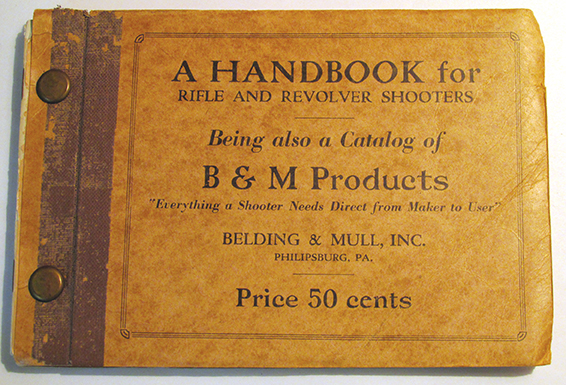
In 1916, Warren S. Belding and Nate Mull founded a mail order operation specializing in products for shooters and sportsmen. As these things often naturally develop, the co-proprietors deliberated the feasibility of extending their enterprise to include the manufacture of a number of items that answered a need and ever-increasing demands of the “gun-cranky” American rifleman. The time and the market had never been more right. After Armistice, the market was supersaturated with the essential machine tooling and priced to sell.
In 1923, Mr. Belding manned the B&M booth at Camp Perry’s Commercial Row with a handful of telescopic sights. Two years later, Belding and Mull had the Row’s only electrically lighted shed, brightly illuminating a display of 131 items of their manufacture. Their line now included bullet moulds in the full spectrum of calibers.
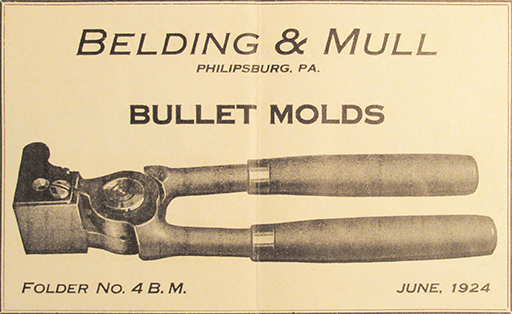
The first mention of the moulds was in May of 1924, and particulars were fleshed out in a circular released in June of that year. An American Rifleman advertisement that same month showcased the two key mould designs in the B&M line-up. By investing in a costly quarter page ad, Misters Belding and Mull were making a high stake, ultra-serious attempt to get noticed with their moulds introduction. Illustrated larger than life for effect were the .30 caliber Squibb-Miller and the Squibb Spitzer, which were in certain small but cognizant circles, not totally unknown. “Already famous” were the words B&M’s ad writers chose to express their firm’s intent. Squibb and Miller were not household names and pinning the company’s hopes on a couple of relatively undistinguished bullets required both optimism and faith.
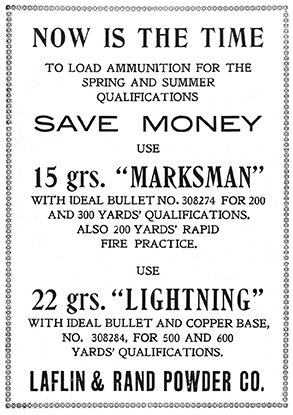
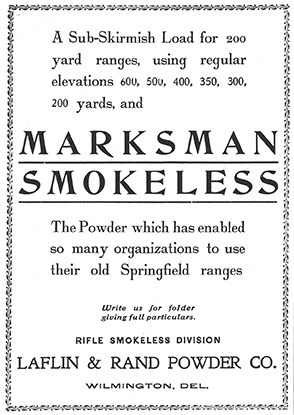
If the Springfield rifle were to be fired on the existing range, the membership determined, a low-powered, glance-proof handload, which was ballistically along the lines of the mild-mannered 32-40 would be required.
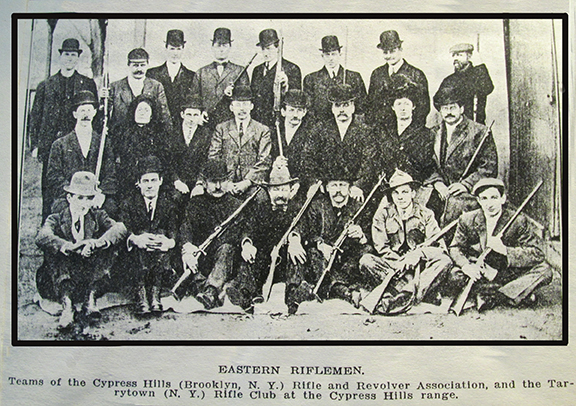
Sam Squibb, club secretary and accomplished Schuetzen rifleman, spearheaded the drive to develop the necessary loading. The name Sam Squibb has the uncertain feel of a pseudonym, the use of which was the quaint custom of a day already passed, but rather than a whimsical reference to a feebly discharging cartridge, it was his real name. When the Cypress Hills range was opened in 1906, its members elected Sam Squibb as its first shooting master. Sam was a 46-year-old, father of three with a lifelong involvement in the quarrying business. He got his start in 1900, as a blacksmith and tool sharpener in the stone yards. He worked his way into the management aspect of the trade and served as a union officer at various levels, including as president of the Granite Cutters International.
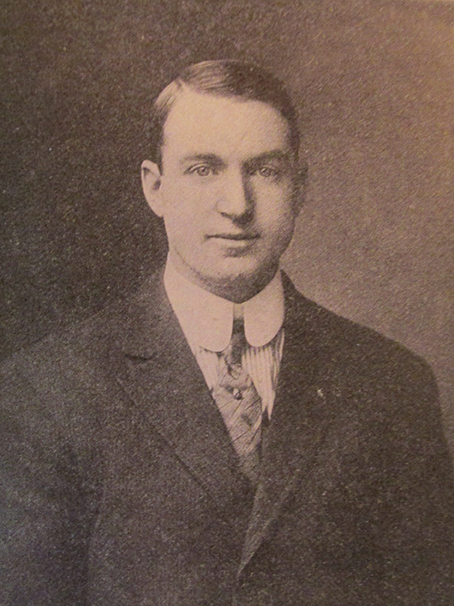
An account of Squibb’s preliminary efforts in this direction is found in a letter printed in the February 1910, issue of National Sportsman magazine. At that point, Squibb’s efforts appear to be mostly a solitary undertaking. Along with the mention of his work to that point, we find the man’s modest self-description as a confessed “. . . plugger, piking along with no hope of ever landing in the Hall of Fame but shooting for the love of it.” He was then at the stage of focusing on nearly full power with the ignition of 34-36 grains of Marksman powder for each shot. Recent results with an experimental sharp-pointed 180-grain bullet, the cherry having been made for him by club member Mr. Haskell, showed great promise, staying in a 2.5-inch circle at 200 yards. Accompanying the hope-filled report was the lamentation that this load, and everything else he’d tried, was needlessly powerful. Mr. Squibb had yet to learn that he was handicapping himself by burning too much powder.
The hot nitroglycerine-based powders of the day were partially responsible for the disappointing performance of the Ideal bullets the Cypress Hills group had tried. The searing ignition of Sharpshooter, Infallible, and Lightning torched past the bullet’s base and left a trail of alloy along the length of the bore. Cleaning the rifle at the end of a day’s shooting was a ritual of bristling out shiny streaks and flakes of lead. This handicap was mostly eliminated with the release of DuPont No. 80 in 1913.
With the leading matter under control to the extent that it could be, the bullet itself became the sole obstacle to overcome. Mr. Squibb had tried every approach in the lead bullet shooter’s bag of tricks and came up short. Discouraged yet determined, and advantaged by knowing what didn’t work, he struck out in a different direction and dabbled in the design of other bullets. To achieve this end, the energies of a dozen club members were focused on this common objective. Two of them, both driven and imaginative, became uncommonly involved.
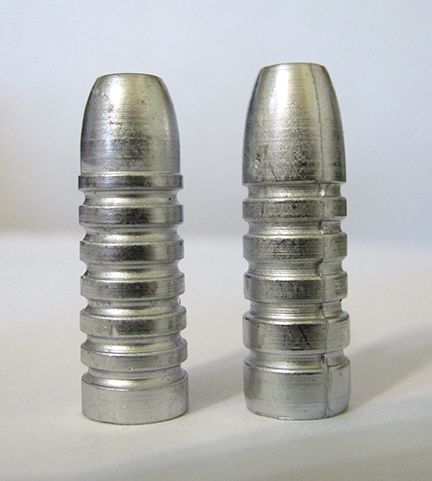
About 1920, legendary barrel maker and equally prominent Schuetzen marksman Harry Pope developed a tapered .30 caliber bullet for topflight short-range accuracy. His seven-banded 170-grainer tapered at both ends. The top four bands at .301 were barely marked by the lands, while the fifth and sixth, at .3025 were more meaningfully engraved. The base band measured a bore-corking .314-315. The inward slanting base band provided trouble free seating, but its chief purpose was to eliminate finning, the formation of tiny vanes of alloy displaced by each groove which trailed the flat based bullet’s steering end. The fins could vary in length, which conceivably could affect accuracy. Pope’s system was as close to breech seating as fixed ammunition could approach.
Club officer Arthur Hubalek was one of the finest offhand and gallery shots in the East, and just outside Team Squibb’s inner circle. Hubalek favored a charge of 12.5 grains of No. 80 for his Squibb-Miller shooting in his Springfield. Hubalek gave Squibb’s band of experimenters the unlimited and free use of his personal machine rest.
Major John W. Hession of the elite Manhattan Rifle and Revolver club had been expected to compete. Hession was an Olympian, Palma Team member, two-time Wimbledon Cup winner, and on any range was regarded as the man to beat. He’d brought with him the finest outfit procurable. His 32-inch Pope-barreled Springfield was telescope-sighted and his 30-06 cartridges were hand-loaded with 12 grains of No. 80 behind the new Pope taper-base bullet.
Leonard Miller was shooting as a member of the Brooklyn Rifle Club. His rifle was a No. 3 weight Winchester-barreled Springfield, also scope sighted. Miller’s cases held 12.5 grains of No. 80 and topped with the newer Squibb-Miller bullet. Each man had equal opportunity to perforate the two-inch, ten-ring. When the smokeless had cleared, League President Harry Pope officially scored the targets and declared Miller the winner by a single point. Miller’s “giant-killing” and much celebrated achievement was all the talk at New York City’s many gun clubs for some time, and its mention in the magazines didn’t die out entirely for nearly a year. Belding and Mull got their share of mileage out of it, too.
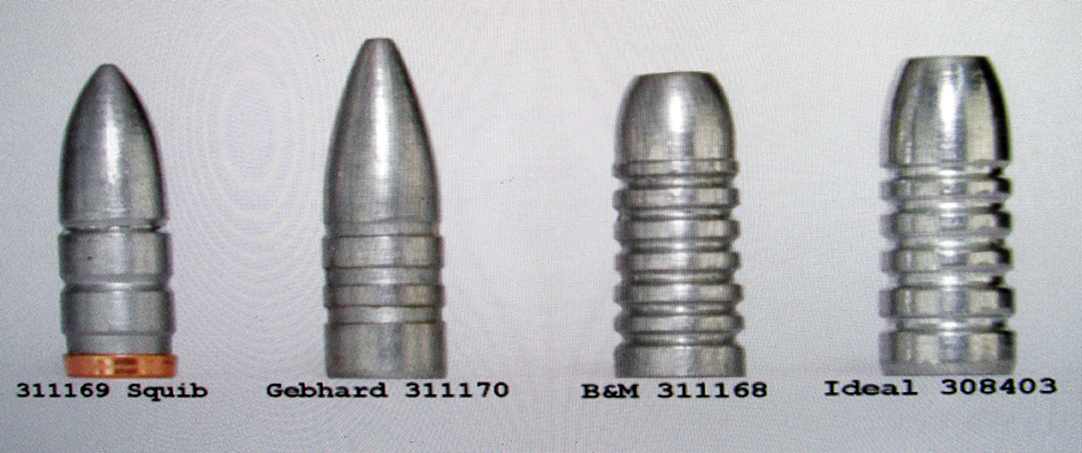
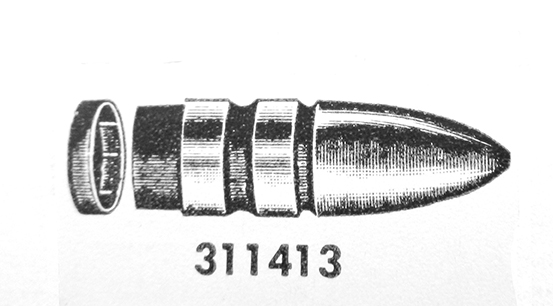
What ultimately resulted was a sleekly pointed spitzer with a gracefully flowing ogive. The weight and form were patterned after a government full metal-jacketed spire-point. The Squibb bullet weighed 169 grains and fit the Springfield’s throat like it should. Sized to .309 and propelled by 11-16 grains of No. 80 (1,150-1,375 fps) the Squibb delivered the goods at the target; some of the 100-yard machine rest targets broke the one-inch barrier. One group in particular raised the eyebrows of Arms And The Man readers in August of 1922. An illustration showed the imprint of five Squibb bullets that a dime would hide. The sought-after grade of accuracy had been achieved.
Charles Gebhard, who also answered to “Pop,” was the senior member of the Squibb triumvirate. Charlie had an old-timer’s involvement in the rifle sports without the old-school outlook. Creative and resourceful, he brought to the effort an inventive flair and an investigative turn of mind.
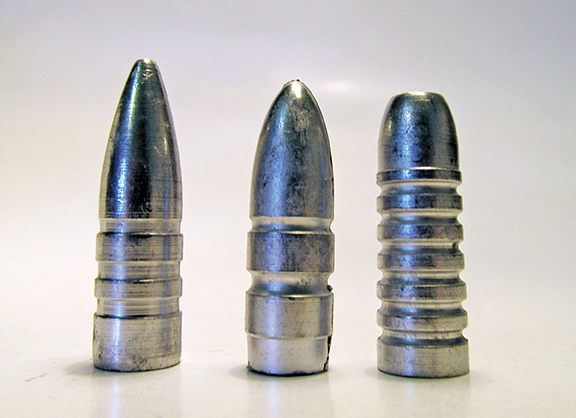
Mr. Gebhard finally arrived at a pointed bullet that he was pleased to put his name on. Predictably, the best accuracy wrested from the Gebhard bullet occurred, just as it had for Squibb and Miller, at the 1,200 to 1,400 fps level generated by light charges of DuPont No. 80.
Emanating from metropolitan New York in 1922, word of the wonderful scores turned out by the Squibb-Miller, Squibb and the Gebhard bullets fanned out along the East Coast. A demand and a market were created thereby. The designers turned out a few moulds for sale. The fledgling firm of Belding and Mull expressed an interest in manufacturing and marketing the moulds. Thus, the Squibb-Miller became well known as B&M 311168, the Squibb Spitzer was assigned 311169, and Gebhard’s pointed bullet was given the designation 311170.
Though not in-house designs, Belding and Mull aggressively promoted the “famous” bullet designs of the Cypress Hills riflemen along with their own, and carried them in their catalogs for almost thirty years. Belding and Mull also handled these bullets cast and ready to load.
Lyman Gunsight acquired Ideal in 1925, and two years later the Squibb bullet was introduced as a regular production mould in the Lyman line up, and it has been well known thereafter by its Lyman bullet number 311413, aka “Squibb”. It has been one of the most popular .30 caliber cast bullet of the past 100 years.
Sam Squibb went to the top levels with the Granite and Stone Cutters Union. In December of 1934, he was killed in traffic while exiting a bus on a Quincey, Massachusetts street. The old Belding and Mull is no more, and the three .30 caliber bullets that helped to establish the firm are no longer famous, but the trio of celebrity bullet designers in a very small circle are no longer unsung.
ADDENDUM
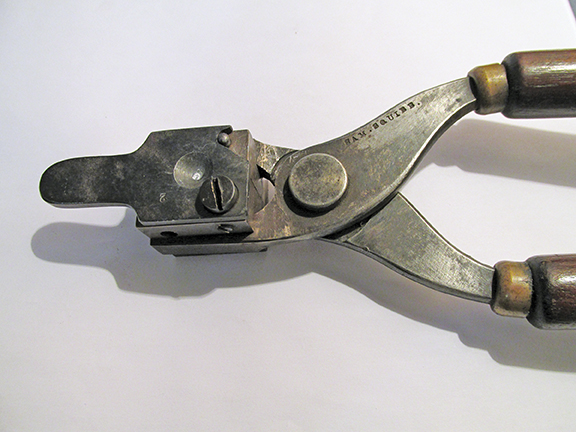
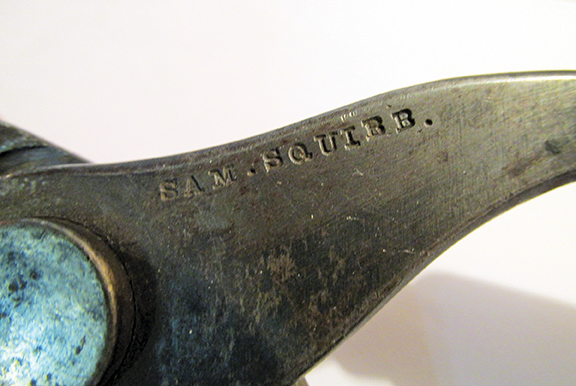
Some time back, an interesting bullet mould came on the market and it must have been in the cards that I wind up with it. It started its useful life as a common Winchester mould cut for the standard .22 W.C.F bullet. As the need arose, it was a prime candidate for modernization. At some point, the unitized mould was scavenged for its handles and block of solid bronze were expertly fitted to replace the integral block of the factory mold. The replacement block was cherried for an up-to-date cavity, the .30 caliber Squibb, and pinned to the Winchester frame. Completing a nice piece of machine work, the handles were marked with what was presumably the owner’s stamp. This mould conversion could not have landed in a more appreciative home.