

Reflecting on the 44-40
Part I
feature By: Mike Nesbitt | June, 26

Later, in the 1920s, Winchester introduced their Model 53 which was an updated version of the ’92, and over 3000 of those were chambered for the 44-40. I had one of them many years ago but wasn’t smart enough to keep it.
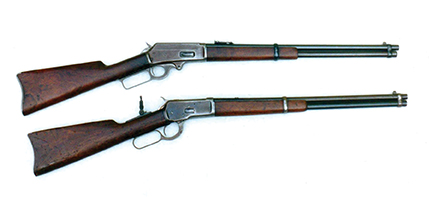
I have no idea how many of the Marlin lever actions (Models of 1888, and ’89 plus the very nice Model of 1894), were made in 44-40. Adding to those non-Winchester rifles we should count the Colt Lightning pump action rifle, as well as the Colt Burgess lever action, and the Remington Model 14½ slide action from the early 1900s. Another rifle that deserves mention is the Whitney-Kennedy lever action rifle that was first offered chambered for the 44-40 in 1880, before other versions for larger cartridges were introduced.
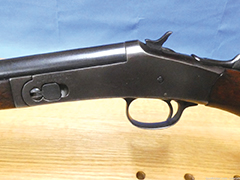
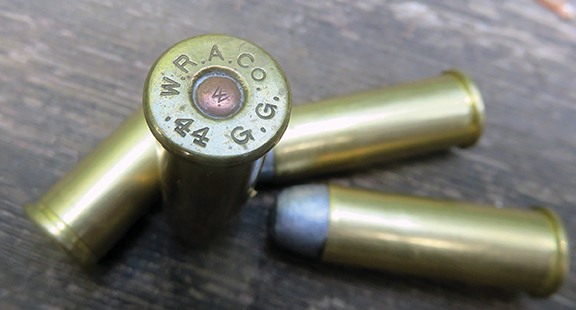
Back in the early days before the advent of the 410 shotgun and shot shell, the standard small scattergun for small game such as grouse, squirrels or rabbits was (you guessed it), the good old 44-40. Those little shotguns were not known or marked as 44-40s, they were commonly simply marked “44 caliber”. The reason for that was probably because of barrels with choked muzzles. Those shotguns weren’t supposed to shoot the ammunition with full-size bullets intended for the rifles. Instead, they might fire the 115-grain round ball, which was loaded in the 44 Marbles “Game Getter”, or the shot loads that were featured in the 44 XL. Some of the shot loads in the 44 cartridges used a wooden “bullet” which contained the shot, others used an extra-long case which held the shot similar to the 22 Long Rifle shot cartridge. After the 410 came out around 1925, some of the 44 shotguns, such as the Harrington-Richardson single shot, were marked and chambered to accept both the old 44 shot loads and the new 410s.
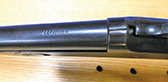
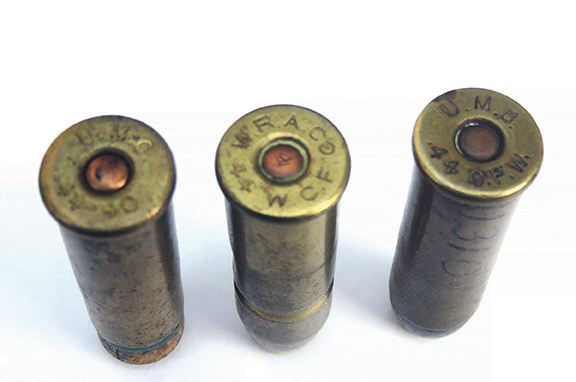
For a few years I considered getting one of the old 44 caliber shotguns. My idea was to reload some 44-40 cases with the plastic-contained doses of birdshot that are made for shot loads in some of today’s 44 caliber revolvers. One reason why I never did that is, because I still have a very good 410, one of the Savage Model 24s with the .22-caliber barrel on top, and I don’t use that enough, either. Now my nephew has just bought one of the old 44 caliber single shot shotguns and he’ll be loading some shot loads in the longer “5-in-1” cases. The 5-in-1 cases were made for shooting blanks in the 38-40 rifles and pistols, 44-40 rifles and pistols, plus the 45 Colt. That’s where the “5” comes from and the “1” means that single cartridge would function for all five calibers. And being full length, the 5-in-1 cases are the same length as the old 44-40 shot loads that used the longer cases. More will probably be said about this nephew’s gun and loads after he gets some time to use them.
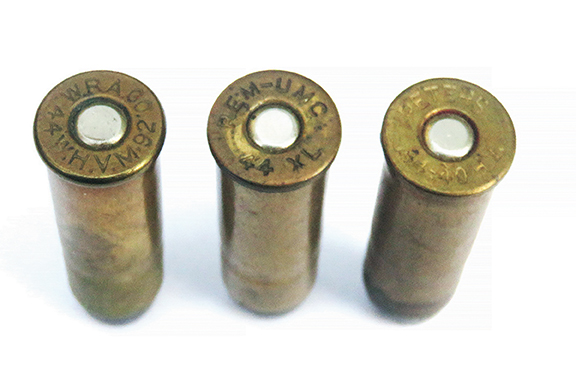
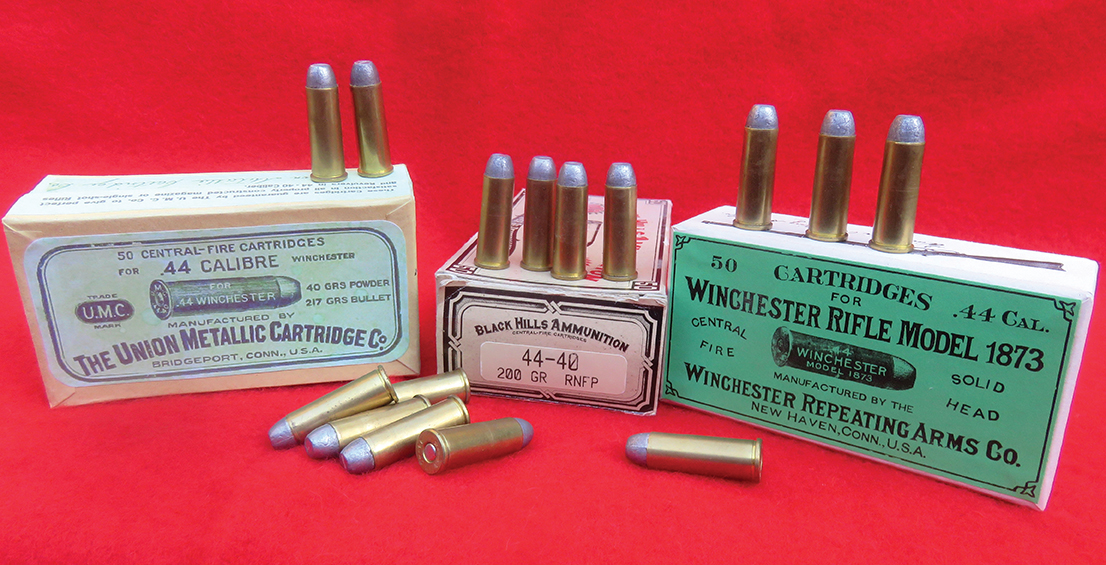
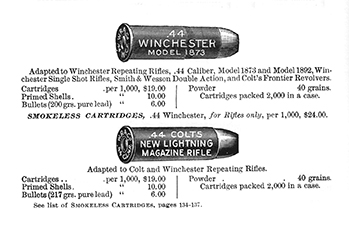
Certain loads were mentioned along with specific guns. The Game Getter loads were primarily for the Marbles Game Getter and the 44 XL loads were mostly intended for the 44 shotguns. The shot loads could generally be fired in rifles and in many cases the shot loads were not loaded in the longer shells. Among the standard rifle loads there were differences too. The 44-40 Marlin, as shown in the 1916 Winchester catalog, fired a 217-grain bullet instead of the standard 200-grain slug. Therefore, the cartridges for the Colt Lightning and those cartridges were head-stamped with “44 CLMR”, which stood for 44 Colt Lightning Magazine Rifle. UMC began offering a load for the 44-40 with 217-grain bullets in 1886 and then discontinued it in 1905. Those were black powder loads using 40 grains of powder. The 44 Game Getter, with its 115-grain round ball, used 34 grains of black powder, and the standard 200-grain bullets plus a 180-grain hollow point bullet were also loaded with 40 grains of black powder. Those loads gave shooters a wide variety to pick from.
Around the turn of the twentieth century, smokeless powders made their mark in the old 44-40s with the introduction of the High Velocity loads. Those were always – to the best of my knowledge – marked on the head-stamp, such as on the “WRA 44 WHV M ‘92”, which stood for “Winchester Repeating Arms” as the ammunition maker, and “44 Winchester High Velocity Model ‘92” for the rifle it was intended for. Those old high velocity loads
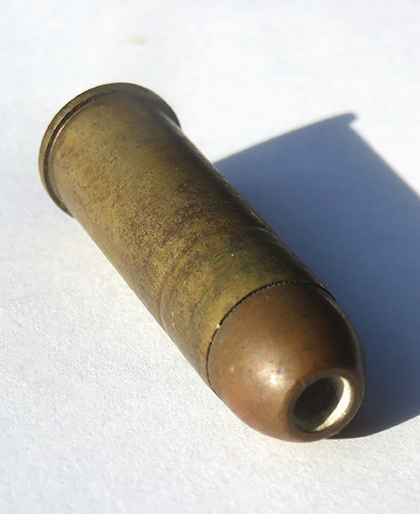
About 60 years ago, the father of a schoolmate told me a story about what happened to his Model ’73 in 38-40, when he mixed his rifle with high velocity factory loads. This might have taken place around 1940, when most of the high velocity loads for the old Winchester cartridges were discontinued during WWII when sporting ammo was hard to find. He was given the partial box of cartridges and was glad to get them. Without suspecting that those cartridges, made by Peters, were anything different, he began to use them. On the third shot, the ‘73’s side-plates were blown off and the toggle-links damaged beyond repair. The rifle was considered a total loss. He gave me the ammo that remained in that cartridge box and I still have them today. The bottom line is, if you find any of those old high velocity loads these days, don’t use them in a ’73 or revolver; they’re too much for the weaker guns.
While we’re talking about the high velocity loads for the 44-40, the fastest was the “Hi-Speed” loading introduce by Remington about 1930, using at first a 140-grain jacketed hollow-point “Mushroom” bullet, which was replaced by a 160-grain “Mushroom” bullet a short time later. Those were said to have a muzzle velocity of nearly 2,000 feet per second. This is mentioned mainly to show how the 44-40 was still very alive and well just before WWII. However, those “Hi-Speed” loads had been discontinued by the mid-1940s, perhaps because of safety concerns that they might find their way into the chambers of the Model 1873s or revolvers.
Just over 40 years ago, I did a lot of shooting with the 44-40 in both rifles and revolvers and the old 44 Winchester really earned my respect. Most of my shooting was done with a Model ’92 carbine and I shot it with cast bullets because my carbine has a black powder, soft steel barrel. Those bullets were cast from a double cavity Lyman mould for #427098, the old Ideal design, and one cavity was hollow-pointed, so I’d get a hollow point and a solid nosed bullet with each casting cycle. My loading, in those years, was done with smokeless powder and in 1988, the September-October issue of Rifle magazine, carried my story about, The 44-40 As A Rifle Cartridge.
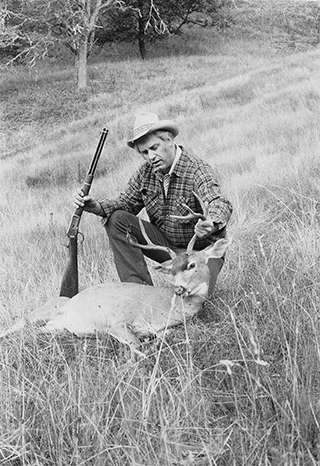
One of those cast hollow point bullets was used to collect the only deer that I took with the 44-40, a Columbian black-tail that I shot at the close range of about 30 yards. The fair-sized buck was hit in the neck, breaking the spine, for an instant kill. That hollow point bullet wasn’t needed for a shot like that. In fact, the bullet broke into three pieces and all three pieces were found under the skin on the far side, no part of the bullet penetrated all the way through the deer’s neck. At that time, I used loads that approached the ballistics of the smokeless high velocity loads for that Model ’92 and my previously mentioned Model 53. The hollow point bullets identified those hotter loads for me, as no hollow points were used in my revolvers.
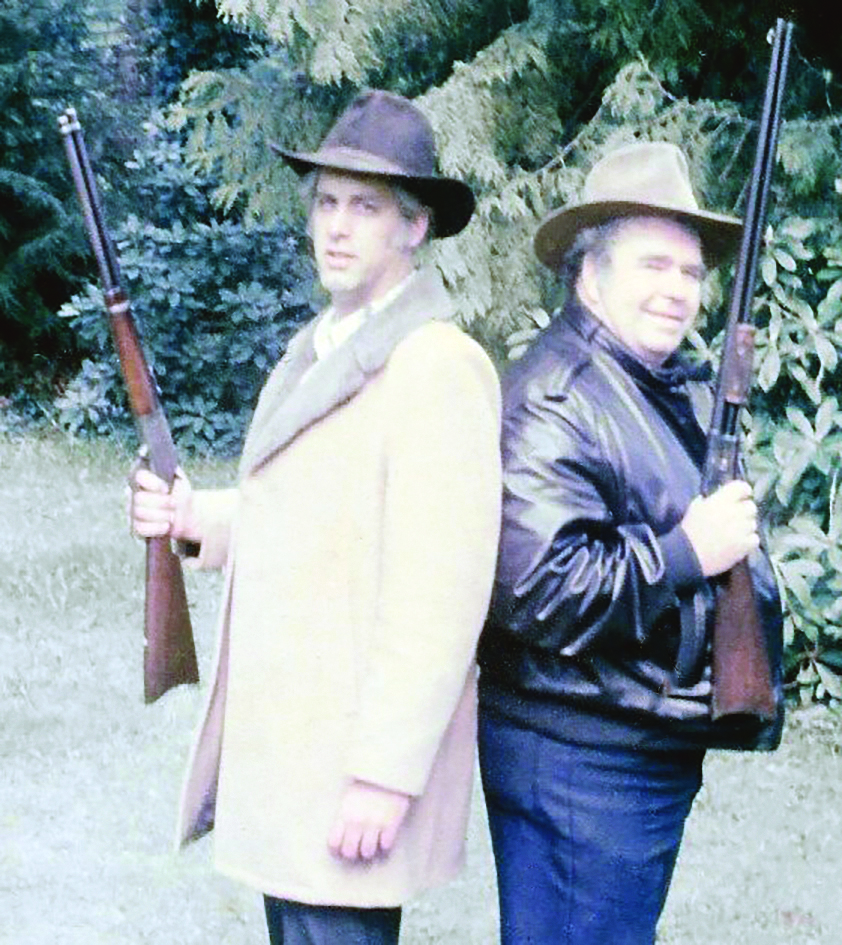
My respect for the old 44-40 cartridge was equally shared by a good friend, the late Hoyt Axton. Hoyt and I had the habit of visiting pawn shops in the early 1980s, where we might find some rifles that appealed to us. One time, we visited such a shop and we each walked out with an old rifle, mine was a Marlin Model 1894 carbine in 44-40. Hoyt’s rifle was just a little fancier, a nice Colt Lightning rifle, also in 44-40. With those two rifles, we were ready for some really fun shooting with both a historical and practical cartridge.